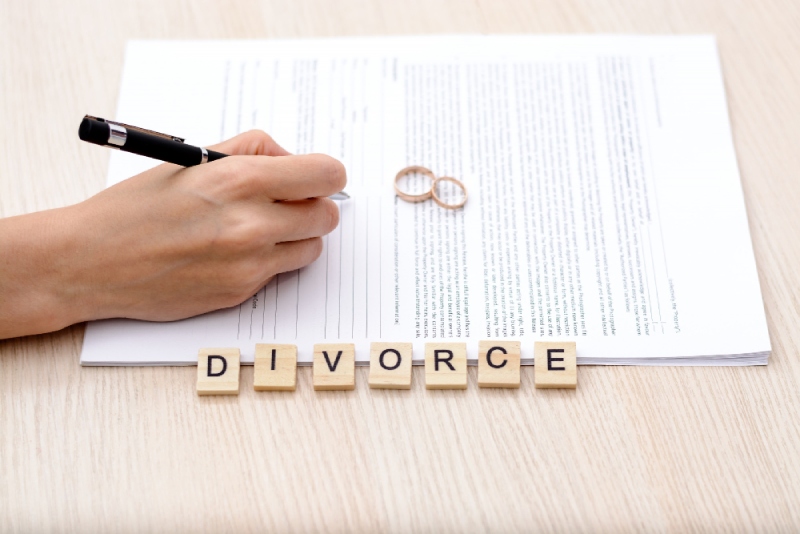
A DIY separation and a DIY divorce are not the same thing in Ontario. Separation deals with what happens after your relationship ends, while divorce is the legal process that ends a marriage.
You do not need a court order to separate. You do need a court order to get divorced.
You can handle parts of either process yourself, while getting legal advice for specific issues when you need it.
KEY TAKEAWAYS
- Separation can occur without paperwork or a court order; a divorce ends a legal marriage only after a court grants it.
- An Ontario separation agreement must generally be in writing, signed and witnessed to be enforceable as a domestic contract.
- Most divorces based on living separate and apart require one year of separation before the divorce can be granted.
- Financial disclosure and independent legal advice can help people understand an agreement before signing it.
The Legal Difference Between Separating and Divorcing in Ontario
Separation means that partners are living separately and apart because their relationship has ended; divorce is a court order that legally ends a marriage. These are different legal events, even when both are part of the same family transition. A DIY approach means you manage some of the process yourself instead of retaining a lawyer for every step.
You can be separated in Ontario without signing a form, hiring a lawyer, or moving to a different address. In some circumstances, people can live separate lives under the same roof. A separation date can still matter for property, financial, and other rights, so keep a factual record of when the relationship changed.
Only legally married spouses need a divorce to remarry. Common-law partners do not obtain divorce orders, but they may still need arrangements for children, support, property or debts. Also, property rules differ for married and common-law partners: the automatic equalization regime generally applies to married spouses, not common-law partners.
For most divorce applications based on separation, the federal Divorce Act requires at least one year of living separate and apart (section 8(2)(a)) before the divorce can be granted. The application may be started during that year. A separation agreement is not automatically a legal prerequisite for divorce, but if there are children, the court must be satisfied that reasonable arrangements have been made for their support before it grants the divorce (Divorce Act, section 11(1)(b)). Resolving parenting, support and financial matters first can make a straightforward divorce more manageable. Galbraith Family Law offers guidance on the divorce process through our DIY Divorce service.
What a DIY Separation Agreement Needs to Include to Hold Up Later
A DIY separation agreement should clearly explain what each person has agreed to. In Ontario, it should be in writing, signed by both people and witnessed. It should also clearly address the issues that apply to your situation, such as parenting, support, property, and debts.
Most couples should work through the following subjects, keeping what applies and removing what does not:
- Basic details: full legal names, the separation date, the agreement’s scope, and how notices or future changes will be handled.
- Children: parenting time, decision-making responsibility, holidays, school arrangements, transportation, and a practical approach to resolving disagreements.
- Support: child support, possible spousal support, payment dates, special expenses, financial information to exchange, and when amounts may be reviewed.
- Money and property: the home, accounts, pensions, investments, businesses, household debts, and, for married spouses, where applicable, property equalization.
- Completion: documented financial disclosure, a final signed and witnessed agreement, and an opportunity for each person to seek their own legal advice.
Child-related provisions are not merely private preferences. Under section 56 of the Family Law Act, courts can revisit parenting provisions in light of the child’s best interests and may disregard unreasonable child-support terms. A signed agreement does not guarantee that every clause will withstand a later legal challenge. Our Separation service provides guidance to those negotiating a separation agreement.
When Couples Choose Separation Without Ever Filing for Divorce
Some couples remain separated for years without applying for divorce, and others never file at all. Separation may meet their immediate needs when they are not planning to remarry, want time to decide whether to reconcile, or prefer to resolve parenting and financial arrangements before pursuing the separate court process.
A written agreement can provide structure during this period. It may clarify where children will spend time, which bills each person pays, and how property will be handled. Negotiation, mediation, and collaborative processes can help people resolve disagreements outside court when the circumstances make that appropriate. Our DIY Separation service offers advice and strategies for people who do not want full representation.
Remaining married can still have legal and financial consequences. Estate planning, beneficiary designations, tax matters, benefits, and future property or support claims may require separate attention. You should not assume that living apart automatically changes these arrangements. If either spouse later wants to remarry, a divorce order will be necessary.
For common-law partners, divorce is not an option, but a separation agreement may still help define their rights and responsibilities. The appropriate terms depend on whether the couple was married, whether children are involved, and what assets and obligations exist.
Common Mistakes to Avoid in a Self-Prepared Separation Agreement
The main risk in a self-prepared separation agreement is not drafting it yourself. It is overlooking information or creating terms that are unclear, incomplete, or legally unsuitable for your family. A seemingly simple template may not reflect Ontario law or your actual finances.
- Leaving assets or debts undisclosed. Ontario courts may set aside a domestic contract or a provision if significant assets or liabilities were not disclosed, or if a party did not understand the contract’s nature or consequences.
- Using general promises such as “we will share expenses fairly.” State the amount, payment method, due date, review process, and responsibility for missed payments.
- Treating married and common-law property rules as identical, or assuming that a person’s name on an account settles every potential claim.
- Trying to make child support or parenting arrangements permanently unchangeable, despite the legal protections afforded to children.
- Signing under pressure, using the same lawyer to provide independent advice to both parties, or failing to have the written agreement properly witnessed.
It is also easy to overlook practical details: who will continue paying the joint mortgage, who will contact the lender, how the account will be closed, or what happens if one person cannot meet a deadline. An agreement between the two of you generally does not change what you owe a bank or other third party. Draft with everyday implementation in mind, not just the signing day.
If the draft already contains gaps, it is usually easier to clarify them before signing than to ask a court to interpret the wording later. The Family Law Act sets out circumstances in which domestic contracts may be challenged, including material nondisclosure and issues with informed consent.
When It Makes Sense to Have a Lawyer Review a DIY Agreement Before Signing
A lawyer’s review is especially useful before signing a DIY agreement that addresses children, spousal support, the matrimonial home, pensions, a business, unequal financial knowledge, or complicated debts. A review can also be helpful when you and your ex-partner agree on the main points but are unsure whether the wording accurately reflects that agreement.
Independent legal advice means consulting a lawyer who advises you, rather than both parties, about your rights, obligations, and the consequences of signing. It is not a statutory requirement for every otherwise valid Ontario separation agreement, but it is a practical safeguard. Each person should have the opportunity to consult their own lawyer, particularly when there is a power imbalance or a significant financial decision.
You do not necessarily need full representation to obtain useful guidance. With a limited-scope arrangement, you may ask a lawyer to assess a draft, explain support or property issues, identify missing provisions, or discuss revisions. Clarify in writing whether you are buying advice only, review and comments, negotiation assistance, or document preparation. Our Independent Legal Advice service is one way to obtain focused support.
Before your review, bring the proposed agreement, financial statements and supporting records, details of existing parenting arrangements, and a short list of questions. If the parties still disagree, discussing mediation or negotiated settlement may be more appropriate than rushing to sign. At Galbraith Family Law, every lawyer focuses exclusively on family law, and our approach begins with practical, out-of-court options where appropriate.
Frequently Asked Questions
Do I need a separation agreement if we are not getting divorced?
No. Ontario does not require a written agreement simply for two people to separate, and spouses can remain separated without applying for divorce. However, an agreement can clarify parenting, support, property and debt arrangements. Where a separation agreement is intended to operate as an enforceable domestic contract, the Family Law Act generally requires a written document signed by both parties and witnessed (section 55(1)).
Can a DIY separation agreement be changed later?
Yes. Both parties can agree to amend or replace a separation agreement, but changes to a domestic contract generally must be in writing, signed and witnessed to be enforceable under Ontario’s Family Law Act. Some terms, especially those involving parenting or child support, may be affected by later circumstances or court decisions. Seek advice before assuming a major change is automatic.
Is a verbal agreement to separate legally binding in Ontario?
You do not need verbal or written permission to separate, so a conversation can establish that the relationship has ended. However, an oral arrangement is generally not an enforceable separation agreement as a domestic contract under section 55(1) of Ontario’s Family Law Act. To document enforceable contractual terms regarding support, property or parenting, use a properly written, signed and witnessed agreement.
What happens if we skip a formal separation agreement altogether?
You can still be separated, and a married spouse may later seek a divorce without first signing a separation agreement. However, if there are children, the court must still be satisfied that reasonable support arrangements are in place. The difficulty is that parenting, support, property and debt questions may remain unresolved. Depending on the facts, those issues may require further negotiation, mediation or a court decision. Written terms often reduce uncertainty, but they must be suitable for your circumstances.
Conclusion
DIY separation and DIY divorce serve different purposes: one helps organize life after a relationship ends, while the other obtains the court order that dissolves a marriage. You can choose how much of either process to manage yourself, provided you understand what remains your responsibility. Our focus is on practical guidance, clear next steps, and settlement where appropriate, with support tailored to the level of service you choose. If you want help deciding which level of support fits your situation, request a consultation with Galbraith Family Law.
General information only. This article is not legal advice; the application of Ontario family law depends on your circumstances and the law in force when you act.